


Ro-Ro passenger vessels over 20 years in service are increasingly being subject to more detailed inspections during Passenger Ship Safety Certificate (PSSC) inspections and surveys.
Based on recent vessel support work and locker specification reviews, we are seeing increased focus on how equipment stored within Ro-Ro safety lockers is documented, identified, and supported with certification.
This includes MOB recovery equipment, casualty recovery equipment, lifting equipment, and other Ro-Ro safety locker equipment stored within Ro-Ro lockers.
Requirements and interpretations can vary depending on vessel type, flag state, and surveyor approach. The observations in this article are based on recent survey preparation discussions and operational support work involving UK Ro-Ro passenger vessels.
Changing Ro-Ro Locker Assessment Trends in PSSC Surveys
Historically, Ro-Ro safety lockers were often assessed as complete approved units. Once system approval was in place, the locker contents were generally treated as covered under that approval.
More recently, during Passenger Ship Safety Certificate survey preparation discussions and operational support work, we have encountered increased attention being placed on individual items within Ro-Ro lockers, rather than only the locker as a complete system.
This reflects how inspections are being carried out in practice, particularly on older Ro-Ro vessels.
As a result, survey discussions now tend to focus on both:
- The Ro-Ro locker as a system
- The individual equipment stored inside it
In some cases, this includes requests for supporting information such as:
- Serial numbers for individual components
- Manufacturing dates
- Expected service life information
- Certification for lifting equipment
- Safe Working Load (SWL) markings
As mentioned above, this reflects a shift towards reviewing equipment at item level rather than only assessing the locker as a complete approved system.
Lifting Arrangement Certification, SWL Marking and Ro-Ro Locker Contents
One area receiving increased attention during survey preparation discussions is lifting equipment and recovery systems stored within Ro-Ro lockers.
These systems are used during man-overboard recovery and casualty lifting operations where controlled lifting capability is essential.
In recent operational support work, we have encountered increased focus on:
- Clear SWL marking across lifting components
- Certification for lifting tripods and associated systems
- Documentation and lifting arrangement certification for complete lifting arrangements and individual parts
- Supporting evidence showing equipment ratings and intended use
The lifting equipment that was previously treated as part of a complete locker system is increasingly being reviewed at component level, with greater focus on certification, traceability, and documented SWL ratings.
-
-
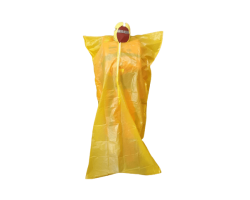 Thermal Protective Aids (TPA) – MED, SOLAS, UKCA & Red Ensign
Starting at £10.74 £8.95


Equipment Lifespan, Manufacturing Dates and Lifecycle Control
This is becoming increasingly relevant as operators review Ro-Ro safety locker equipment across ageing fleets.
Some items, such as lifting strops and recovery equipment, may have manufacturer-defined service life limits depending on product type and operating conditions.
In recent survey preparation work, we have encountered increased focus on:
- Manufacturing dates for individual locker items
- Time-in-service tracking
- Manufacturer guidance on service life limits
- Replacement planning for time-expired equipment
This is contributing to more structured lifecycle management, where equipment age, condition, and supporting records are reviewed alongside physical inspection.
Examples from Recent Locker Equipment Supply and Survey Preparation Work
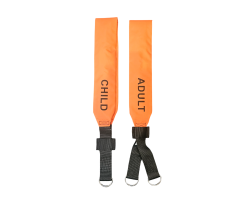
In recent supply and locker upgrade projects, we have provided adult and child recovery strops with individual serial numbers, manufacturing dates, and manufacturer-defined service life information.
This has often been in response to requests for improved traceability and clearer lifecycle documentation during survey preparation discussions.
In recent supply and locker upgrade projects, we have provided adult and child recovery strops with individual serial numbers, manufacturing dates, and manufacturer-defined service life information (typically around 5 years depending on specification).
This has often been in response to requests for improved traceability and clearer lifecycle documentation during survey preparation discussions.
In discussions with operators and shipyards during procurement and survey preparation work, we have encountered a range of rope ladder specifications for Ro-Ro lockers.
While some specifications reference ladder lengths of around 10 metres in operational contexts, we have also seen cases where significantly longer ladders were specified, which can create practical storage constraints within locker designs.
A commonly referenced requirement for Ro-Ro applications is a rope ladder of at least 10 metres in length. However, we continue to encounter specifications requesting significantly longer ladders, which may not always be necessary and can create storage challenges within locker designs.
In recent projects, including work with major ferry operators, we have supplied rated lifting tripods where lifting arrangements were reviewed during survey preparation under relevant onboard lifting safety practices.
In several cases, we have observed a shift away from treating the lifting system as part of a single approved locker assembly, towards reviewing the tripod and lifting arrangement at component level, including Safe Working Load (SWL) marking and supporting certification.
Similarly, in recent locker upgrade and replacement projects, we have supplied rated block and tackle systems as part of casualty recovery and lifting arrangements.
Historically, these systems were often supplied as part of a complete locker equipment package. However, in more recent survey preparation discussions, we have encountered more cases where surveyors assess each lifting component individually, checking certification, traceability, and SWL marking.
Tripod Chain Retention / Mounting Arrangement
Within some locker configurations, tripods are secured using short chain lengths mounted on hooks to retain the equipment in place.
In cases where operators have upgraded to larger or differently specified tripod systems, we have encountered situations where existing chain lengths were no longer optimal for secure storage. In these instances, a longer chain was required to ensure proper fit and safe stowage within the locker.
Increasing Importance of Documentation in Ro-Ro Locker Compliance
Across recent survey preparation work, documentation is playing a significantly greater role in compliance checks.
Survey focus is increasingly placed on whether supporting records are complete, available, and easy to present.
Typical documentation requirements encountered include:
- RO-RO Locker inventory management record
- Certification for lifting equipment and recovery systems
- SWL documentation for load-bearing components
- Serial number and manufacturing date records
- Supporting evidence of relevant safety standards
In some cases, missing or incomplete documentation can lead to additional survey queries, even where equipment is physically in good condition.
What This Means for Ro-Ro Vessel Operators and Shipyards
For operators managing Ro-Ro vessels in extended service life, these developments are leading to a more detailed approach to locker and equipment management.
Common operational considerations include:
- Improved locker inventory management and equipment traceability
- Structured documentation packs for each locker
- Regular review of equipment condition and service life
- More active lifecycle management of safety equipment
For shipyards and procurement teams, Ro-Ro locker compliance now involves more than equipment supply alone.
Certification, traceability, SWL marking, and documentation readiness are increasingly important considerations during survey preparation.
Recent projects have included supplying recovery strops with serial numbers and service life information, as well as rated lifting tripods and block and tackle systems where survey preparation discussions highlighted increased focus on component-level documentation.
Industry Trend: Ro-Ro Locker Compliance and Documentation Standards
Overall, we are seeing greater focus on documentation, equipment identification, and traceability within Ro-Ro safety lockers.
While requirements and interpretations can vary between vessels and surveyors, these themes are appearing more frequently during survey preparation discussions and compliance reviews.
Looking Ahead: Ro-Ro Locker Compliance Checklist for PSSC Surveys by I.C Brindle
As expectations continue to develop, operators are reviewing how Ro-Ro lockers are structured, documented, and maintained across their fleets.
To support Passenger Ship Safety Certificate survey preparation, we have developed a practical, easy-to-use Ro-Ro Locker Compliance Checklist.
This checklist is designed as a simple reference tool for equipment, certification, and documentation commonly reviewed during PSSC survey preparation.
-
- Thermal Protective Aids (TPA) – MED, SOLAS, UKCA & Red Ensign
Starting at £10.74 £8.95