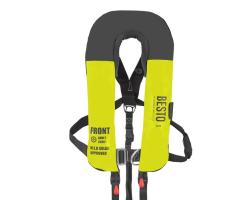
A SOLAS lifejacket is a life-saving device designed to meet the strict safety standards set out under the International Maritime Organisation’s SOLAS Convention. It is intended for use in commercial shipping, offshore operations, and other regulated marine environments where reliability, performance, and compliance are critical.
SOLAS lifejackets are governed under SOLAS Chapter III and the International Life-Saving Appliance (LSA) Code, which set out mandatory construction, performance, and testing requirements for approved life-saving equipment used at sea.
As a result, SOLAS-approved lifejackets represent one of the highest internationally recognised standards of marine safety equipment, used where regulatory compliance and proven performance are essential.
What Does SOLAS Mean?
Originally introduced following the RMS Titanic sinking, SOLAS has evolved into the most important global safety framework for maritime operations
SOLAS stands for 'Safety of Life at Sea', an international maritime treaty established and maintained by the International Maritime Organisation (IMO). It sets minimum safety standards for ships, including the mandatory carriage of approved life-saving appliances.
SOLAS requires lifejackets to comply with the applicable requirements of the LSA Code, which sets out detailed performance standards and testing criteria.
Key Features of a SOLAS Lifejacket
SOLAS lifejackets are not general-purpose flotation devices. They are certified under the International Maritime Organization’s SOLAS Convention and tested to strict international standards defined in the International Life-Saving Appliance (LSA) Code to ensure reliable performance in emergency maritime conditions.
1. High Buoyancy (150N or 275N minimum, depending on lifejacket type)
SOLAS lifejackets must provide sufficient buoyancy to support the wearer in rough water conditions, including when wearing heavy clothing or additional survival equipment. Inflatable models are designed to maintain performance under extended immersion conditions in line with International Life-Saving Appliance (LSA) Code testing requirements.*
1.1 *Important design note: Inflatable lifejackets approved under the International Life-Saving Appliance (LSA) Code are required to have at least two separate buoyancy compartments. This ensures that if one chamber loses buoyancy, the lifejacket can still meet the required performance standards, including maintaining flotation and self-righting capability in accordance with LSA Code requirements (LSA, paragraph 2.2.2)
In practice, many SOLAS-compliant inflatable lifejackets used in offshore and commercial applications achieve this requirement using a twin-chamber (dual bladder) design. This provides redundancy by allowing a second independent chamber to maintain buoyancy if the primary chamber fails.
However, the exact construction method is not prescribed under the SOLAS Convention or LSA Code. Manufacturers may use different internal designs to achieve compliance, provided the lifejacket contains at least two independent buoyancy compartments and meets the required performance standards.
Additional specifications may also vary depending on vessel type, operational risk assessment, operator requirements, or national guidance, including UK Maritime and Coastguard Agency (MCA) codes of practice for specific vessel categories.
2. Automatic Self-Righting (airway protection when floating in water)
A core requirement is that the lifejacket must automatically turn an unconscious wearer face-up in the water and maintain airway clearance. This self-righting capability is a defined performance requirement within the LSA Code for life-saving appliances and is central to SOLAS approval standards.
3. High-Visibility Design (easily spotted by rescue parties)
SOLAS lifejackets must be highly visible in the water. This is typically achieved through:
- Fluorescent outer materials
- Retro-reflective tape
- High-contrast colouration (commonly orange)
- These features are intended to improve detection during search and rescue operations
4. Integrated Safety Accessories
Most SOLAS-approved lifejackets include essential survival equipment such as:
- Whistle for attracting attention
- SOLAS-approved light, designed to meet defined performance and duration requirements under the LSA Code
- Lifting becket to assist recovery from the water
- Buddy line (typically around 2 metres, floating design), used to connect casualties together in the water and help maintain group cohesion during rescue operations. While common in offshore and commercial configurations, accessory layout may vary slightly depending on manufacturer and application.
5. Durable, Marine-Grade Construction
SOLAS lifejackets are designed for demanding marine environments and long-term readiness. They are typically supplied in prepacked, sealed, ready-to-use configurations to ensure rapid deployment in emergency situations.
Important Note on Design: Many SOLAS-compliant inflatable lifejackets used in offshore and commercial applications feature a twin-chamber (dual bladder) design. This provides an additional layer of redundancy in the event of a failure of a primary inflation chamber. However, this is a design feature rather than a universal SOLAS requirement, and configurations may vary depending on operational use and manufacturer specification.
Where are SOLAS Lifejackets Used?
You’ll typically find SOLAS lifejackets on:
- Commercial vessels (cargo ships, tankers, ferries)
- Offshore platforms and wind farms
- Rescue and emergency response vessels
- Maritime training centres
- Lifeboats and muster stations
They are a mandatory requirement under international maritime law for many vessel types.
How Does a SOLAS Lifejacket Work?
A SOLAS (Safety of Life at Sea) lifejacket is a commercial marine lifejacket that keeps a person afloat and turns them face-up in the water, even if they are unconscious. It is built to strict SOLAS and LSA Code rules set by the International Maritime Organization (IMO) and is used on ships, offshore vessels, wind farms, and other regulated marine work.
How It Works
Most SOLAS lifejackets are gas-inflatable. When they go into the water, they automatically inflate using a CO₂ gas cylinder. Some use a hydrostatic (Hammar-type) system, which only activates when the jacket is submerged about 10–20 cm, helping stop accidental inflation from rain or sea spray. They can also be inflated manually using a pull cord, and most have a mouth tube for extra air if needed.
Turning the Wearer Face-Up
The shape of the inflated jacket is designed to roll the wearer onto their back and keep their head out of the water. This helps protect breathing and keeps the airway clear, even if the person is unconscious.
Buoyancy and Design
Many SOLAS lifejackets have two separate air chambers for safety. Most provide 275N of buoyancy, which makes them suitable for use with heavy waterproof clothing or immersion suits in offshore conditions.
Lifejacket Safety Features
They also include key survival features such as a water-activated light, bright high-visibility material, reflective strips, a whistle, and a lifting becket or buddy line to help with rescue and recovery.
Why SOLAS Compliance Matters
Choosing a SOLAS-compliant lifejacket means selecting equipment that meets internationally recognised maritime safety standards, tested for performance under the International Convention for the Safety of Life at Sea (SOLAS).
It provides equipment designed for regulated commercial and offshore use, tested and certified to recognised maritime performance standards for emergency marine environments where compliant life-saving equipment is required.
Choosing a SOLAS-compliant lifejacket means:
- Compliance with international maritime regulations under the SOLAS Convention
- Tested and certified performance to recognised maritime safety standards
- Equipment designed for use in commercial, offshore, and regulated vessel operations
- Widely specified across professional maritime industries worldwide
SOLAS compliance is a legal requirement for applicable vessels under the SOLAS Convention, implemented through flag state regulations and enforced via structured inspection and certification regimes.
Vessels subject to SOLAS are required to undergo regular surveys and safety equipment inspections to confirm that all life-saving appliances, including SOLAS lifejackets, are correctly supplied, maintained, and serviceable. These inspections are carried out during annual and renewal surveys under flag state authorities and recognised classification societies.
Between formal surveys, operators remain responsible for ongoing onboard safety checks, including visual inspections, correct stowage, and ensuring equipment is maintained in a ready-to-use condition for immediate deployment.
In the UK, lifejacket servicing* and inspection must be carried out through Maritime and Coastguard Agency-approved service stations, with equivalent national authorities responsible for compliance internationally.
Together, these requirements help ensure SOLAS life-saving equipment remains operational, compliant, and fit for purpose throughout its service life.
*Important: I.C. Brindle is not an MCA-approved SOLAS lifejacket service station. Where applicable regulations require servicing to be carried out by an MCA-approved service station, owners and operators should ensure that their lifejackets are referred to an appropriately authorised service station for the specific make and model.
Final Thoughts: Key Takeways on SOLAS Lifejackets
A SOLAS lifejacket is a certified piece of life-saving equipment designed to meet internationally recognised maritime safety standards under the International Convention for the Safety of Life at Sea (SOLAS). For commercial vessels and offshore operations, SOLAS-approved lifejackets are required on applicable vessels and are tested to defined performance standards for use in emergency marine environments.
When specifying safety equipment, it is important to consider how SOLAS lifejackets form part of the wider onboard safety system. Lifebuoys, alongside man overboard recovery equipment, and onboard emergency procedures should all work together to support a coordinated response in the event of an incident at sea.
Explore our full range of SOLAS lifejackets below:
-
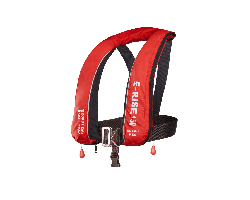 Mullion Hi-Rise 150N SOLAS Lifejacket - 2MSF
Starting at £231.71 £193.09
-
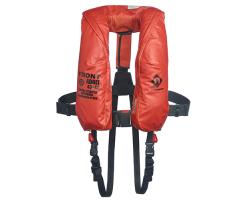 Seacrewsader Crewsaver 275N 3D Wipe Clean SOLAS Lifejacket - 1383-W
Starting at £249.37 £207.81
-
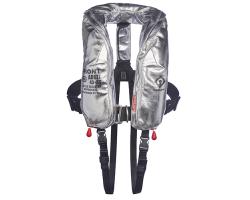 Seacrewsader Crewsaver 275N 3D Fire Retardant SOLAS Lifejacket - 1146-FRAUT
Starting at £598.26 £498.55
-