


The Importance of MOB Recovery Procedures
Recovering a person overboard is one of the most critical emergency operations carried out at sea. When a person falls overboard, the crew must be able to locate, approach, and safely recover the casualty as quickly as possible.
Man overboard (MOB) incidents refer to situations where a person falls into the water and requires immediate recovery and rescue.
International maritime guidance recognises that recovery operations must minimise injury to both the casualty and rescuers. Ships are therefore required to have appropriate plans and procedures in place for these situations, including identifying the equipment intended for recovery.
Under SOLAS Regulation III/17-1, and under applicable requirements in other national codes such as the UK Workboat Code, Commercial Yacht Codes, and UK Small Sea-going Passenger Ship Codes, relevant vessels may be required to have ship-specific plans and procedures for recovering persons from the water. These plans and procedures identify the equipment intended to be used for recovery (MCA MGN 544 Amendment 1, Section 2.1).
The International Maritime Organisation (IMO) further explains under IMO MSC.1/Circ.1447 that recovery procedures should be designed to safely transfer a person from the water to the vessel while minimising impact with the ship’s side and reducing risk to the crew (MCA MGN 544 A1, Annex 1).
Recovery plans should “facilitate the transfer of persons from the water to the ship while minimising the risk of injury from impact with the ship’s side or other structures, including the recovery appliance itself,” (MCA MGN 544 Amendment1, Section 2.2) and, where practicable, recovery in a horizontal or near-horizontal position should be provided.
MOB Recovery Strategy Overview
Man overboard recovery is determined by three key factors:
- Casualty condition (conscious, injured, unconscious, hypothermic)
- Vessel freeboard and access conditions
- Available crew and onboard equipment
From this, recovery operations generally fall into three categories:
- Assisted recovery (conscious casualty)
- Mechanical extraction recovery (restricted access / high freeboard)
- Horizontal recovery (injured, unconscious, or high-risk casualty)
Unassisted Recovery (Low Freeboard / Conscious Casualty can Climb)


Where vessels freeboard is low and conditions allow, a conscious casualty may be able to be unassisted in their own recovery, typically by climbing up a cradle, net or ladder. Where applicable, man overboard equipment, such as a scramble net, cradle or emergency ladder can also enable a conscious casualty to climb aboard even in higher freeboard situations, provided sea conditions, casualty condition, and vessel movement allow a safe and controlled ascent.
This method is common on:
- Small workboats
- Pilot boats
- Rigid inflatable boats (RIBs)
- Fishing vessels
Typical equipment used includes:
- Recovery poles or boat hooks
- MOB Cradles (which can be used to climb if casualty is fit and able or parbuckled if unable)
- Scramble nets or climbing nets
- Emergency Ladders
These methods allow a conscious casualty to assist with their own recovery where conditions permit
However, un-assisted recovery is not suitable where the casualty is:
- injured or immobilised
- unconscious or hypothermic
- unable to climb due to sea state or vessel freeboard
In such cases, crew may use simple guiding aids such as rescue poles or hooks to assist positioning at the vessel side, or help guide the injured or immobilised casualty into a recovery cradle where assisted recovery onto the deck is required.
Smaller fast rescue craft (FRC) style cradles can be used in low freeboard situations to support and stabilise an incapacitated casualty during recovery, allowing controlled lifting even where freeboard is limited, for example on a RIB or similar small craft.
High Freeboard Man Overboard Recovery


Where direct boarding is not practical due to high freeboard or vessel layout, mechanical lifting systems are used to recover casualties from the water in a controlled manner. This may involve high-sided rescue equipment such as rescue slings or lifting strops for vertical extraction, or rescue cradles and recovery stretchers for horizontal or near-horizontal recovery, ensuring safe handling and transfer to deck.
This method is common on:
- Commercial vessels and ferries
- Offshore support vessels
- Large pilot boats
- Ships where deck freeboard or vessel configuration makes direct recovery impractical
Typical equipment used includes:
- Rescue slings and lifting strops
- Winches and handy billy systems
- Davits and cranes
- Recovery harnesses
- Larger MOB Cradles
- Scramble Nets (if casualty is able to climb)
The casualty is lifted from the water using controlled mechanical force, often with guidance from crew using rescue poles or hooks to assist positioning. This method is used in high freeboard situations where direct access alongside the vessel makes casualty self-recovery impractical, and where vertical lifting systems such as handy-billy systems, winches, and davits—combined with rescue slings or davit-launched rescue stretchers—are required to recover the casualty safely from the water.
If access allows, cradles can also be scaled for higher freeboard vessels, with larger length rescue cradle systems designed for high-sided vessels and large commercial or offshore freeboards.
In suitable configurations where a rescue cradle can be safely fitted and deployed from the vessel side, recovery may be carried out without the need for a davit system, using controlled line handling and parbuckling to bring the casualty aboard in a horizontal or near-horizontal position.
Horizontal Recovery (Preferred Where Practicable)


Horizontal or 'near-horizontal recovery' is generally preferred where practicable (MCA MGN 544 Amendment 1, Section 2.3), as it provides continuous full-body support and can help reduce the risk of secondary injury or circulatory instability due to 'circumrescue collapse'.
This is particularly important in reducing serious complications associated with the recovery of immersion casualties (coldwatersafety.org).
Immersion-related incidents can occur immediately before, during, or after rescue, even when the casualty initially appears stable. For this reason, recovery in a horizontal or near-horizontal position is recommended where practicable, particularly for casualties who may be hypothermic or otherwise compromised.
Vertical lifting, or allowing a casualty to sit or stand immediately after recovery, can be dangerous and in some cases fatal. This is due to the loss of hydrostatic pressure in the lower limbs, which can cause blood to pool in the legs when upright. As a result, blood return to the heart is reduced, increasing the risk of circulatory collapse, particularly in hypothermic or otherwise compromised casualties.
Horizontal recovery helps maintain more stable circulation during and after rescue, reducing the risk of deterioration following immersion.
This method is widely used on:
- Offshore support vessels
- Search and rescue vessels
- Wind farm support craft
- Harbour and pilot vessels
Typical equipment includes:
- Rescue cradles
- Recovery stretchers
- Parbuckling systems
- Integrated lifting frames
Horizontal MOB recovery systems are designed to support the casualty in a horizontal or near-horizontal position during recovery, which can help facilitate assessment and treatment once the casualty is brought on deck
There are also specialist lifting systems designed to support horizontal casualty recovery, such as the Legacy double strop system.
Horizontal systems are particularly effective for:
- unconscious casualties
- hypothermic casualties
- immobilised or injured casualties
- situations where crew numbers are limited
To achieve and maintain a horizontal recovery position during extraction, a range of mechanical recovery techniques are used in practice. These systems are designed to support and control the casualty throughout the lift, ensuring body position is maintained during transfer to deck. One of the most effective methods used to achieve this is the parbuckling technique, commonly applied with rescue cradles and scramble nets.
Parbuckling is a commonly used horizontal recovery technique and is described in more detail in the following section:
Parbuckling Method (Horizontal Recovery Technique)


This man overboard lifting technique often incorporates a mechanical advantage system (such as 2:1 rigging), allowing crew members to recover a casualty with reduced physical effort.
A man overboard cradle is typically deployed over the vessel side, and as the casualty is positioned within it, the system is hauled in a controlled rolling motion up the hull.
This provides:
- reduced lifting load
- continuous horizontal support
- controlled recovery while reducing the physical effort required from the recovery team
- improved casualty stability during lift
This method can be used across both low and high freeboard vessels, with cradle size selected to suit the operating environment. Smaller, fast rescue craft-type cradles are typically used on low freeboard vessels for rapid deployment and quick recovery, whilst larger, extended-length cradle systems are used on high-sided vessels and larger commercial or offshore freeboards where additional reach and support are required.
Vertical Man Overboard Recovery


Vertical lifting systems are used where vessel design or operating conditions prevent safe horizontal or alongside recovery, or where mechanical lifting is required to bring the casualty directly to deck level. They are particularly effective for rapid extraction in situations where it is not possible to manoeuvre the vessel alongside the casualty and can be used either in isolation or in combination with horizontal recovery systems to complete a controlled transfer on board.
Typical vertical lifting MOB systems include:
- Rescue slings and strops
- Davits and cranes
- Winch and lifting systems
- Helicopter recovery systems
These systems are effective for extracting casualties from the water where vessel design or sea state prevents safe direct recovery alongside the hull.
Vertical lifting is best understood as an extraction method rather than a final recovery position. It is most effective for lifting a casualty who is still conscious and able to assist, where a rescue sling can be positioned under the arms, or where a lifting strop provides secure vertical support during transfer to deck.
This may be achieved using manual pulley systems attached to the rescue sling or strop, or via powered or mechanical davits, depending on vessel equipment and configuration.
Where equipment design allows, vertical lifting systems may be integrated with horizontal recovery equipment to improve stability and casualty control during transfer.
However, horizontal recovery remains the preferred method where practicable, due to the reduced risk of physiological complications, including rescue collapse (circulatory instability), particularly in hypothermic or otherwise compromised casualties.
That said, while horizontal recovery systems are ideal, vertical lifting still plays an important role. One potential advantage is rapid deployment, particularly in situations where it is not possible or necessary to manoeuvre the vessel directly alongside the casualty. Vertical recovery systems can be deployed independently for rapid extraction, or used alongside horizontal systems to complete a safe transfer on board.
Key Takeaway for Man Overboard Rescue Equipment
Effective man overboard recovery depends on selecting the correct method based on casualty condition, vessel design, and operational constraints.
- Assisted recovery is suitable for conscious casualties on low freeboard vessels where self-recovery is possible using ladders, scramble nets, or similar access equipment
- Mechanical extraction is used where vessel freeboard, geometry, or access limitations prevent direct boarding or assisted recovery, typically using slings, winches, or davit systems
- Horizontal recovery is the preferred method where practicable due to continuous full-body support and reduced risk of physiological complications during recovery, including rescue collapse and circulatory instability, particularly in hypothermic or injured casualties
- Vertical systems are used where direct horizontal recovery cannot be achieved at the point of extraction and may be integrated with horizontal recovery equipment where design allows controlled casualty transfer and improved stability during handling
- Supporting equipment such as throwing lines, lifebuoys, rescue poles, stretchers, and hypothermia protection plays a critical role in stabilising the casualty during recovery and preventing further deterioration
- Recovery plans and procedures should comply with applicable SOLAS requirements and take into account the IMO guidance in MSC.1/Circ.1447 (ICS, 2014) Equipment intended for recovery should be suitable for its intended use and the vessel's specific arrangements.
-
 XL Fibrelight Ladder Stand-Offs - Ladder Standoff for Fibrelight Ladders - 100mm TreadStarting at: £54.00 £45.00
 -
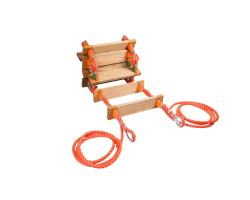 Synthetic (non manila rope) Embarkation LadderStarting at: £587.39 £489.49
 -
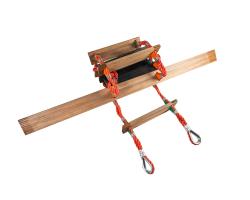 Synthetic (non manila rope) Pilot LadderStarting at: £587.39 £489.49


